

What Is Emotional Intelligence? Definition of EQ and How to Develop Your Emotional Intelligence Skills
Emotional intelligence (EQ) is the ability to blend thinking and feeling to make optimal decisions — a vital skill for thriving in today’s complex world. Put simply, it’s being smarter with feelings. Emotional intelligence helps us understand ourselves, make better decisions and connect with others. In this article, you’ll learn what emotional intelligence really means, how it works, and how to develop it — with practical tools and insights drawn from decades of research by Six Seconds, the world’s largest emotional intelligence nonprofit.
What you’ll find on this page
➔ What Is Emotional Intelligence?
➔ The Six Seconds Model of Emotional Intelligence
➔ Why Emotional Intelligence Matters More Than Ever
➔ How to Develop Emotional Intelligence
➔ Free Resources to Grow Your Emotional Intelligence
➔ IQ vs EQ: Which Matters More?
➔ Global Emotional Intelligence Research
➔ History of Emotional Intelligence
What Is Emotional Intelligence?
Emotional intelligence means being smarter with feelings. Just like mathematical intelligence allows you to solve complex numerical puzzles, emotional intelligence enables us to solve complex emotional challenges. A key component of this is the practice of using emotions as data — noticing, understanding, and responding to emotions with clarity and purpose. It’s not about being overly emotional or always staying calm. It’s about being aware of how feelings influence decisions, relationships, and performance — and learning how to use that awareness to lead a more effective and fulfilling life.
The Six Seconds Model of Emotional Intelligence
To help people put emotional intelligence into action, Six Seconds developed a practical, three-part process that anyone can use to improve emotional intelligence skills in daily life. Grounded in neuroscience and used by individuals and organizations in over 150 countries, the Six Seconds Model of Emotional Intelligence is one of the most widely used EQ frameworks in the world. It also underpins the Six Seconds Emotional Intelligence assessment (SEI), taken by over 500,000 people worldwide.
The model focuses on three core pursuits:
Know Yourself — Build awareness of your feelings and patterns
Choose Yourself — Pause, reflect, and act intentionally
Give Yourself — Align your actions with purpose and values
These three steps help people understand their emotions, manage reactions, and respond with empathy, clarity, and purpose. Instead of treating EQ as an abstract idea, the model breaks it into specific, measurable competencies — like navigating emotions, exercising optimism, and increasing empathy — that drive meaningful outcomes at work, in relationships, and in life. This action-oriented approach makes emotional intelligence practical and teachable — and it’s backed by over two decades of global research. Whether you’re a leader, educator, parent, or coach, the Six Seconds Model offers a roadmap to develop emotional intelligence in a consistent and sustainable way.
Learn more about the Six Seconds Model, its competencies, and how it can transform leadership and teamwork.
🔗 Explore the Six Seconds Model of Emotional Intelligence →
Before you read on, we thought you might like to download our free Practicing EQ eBook. These evidence-based exercises will not only enhance your ability to understand and work with your emotions, but will also give you the tools to foster the emotional intelligence of your clients, students or employees.

Why Emotional Intelligence Is More Important Than Ever
In today’s fast-changing world, emotional intelligence isn’t a “nice to have” — it’s a must have skill for navigating complexity, leading effectively, and building a meaningful life. Research consistently shows that high emotional intelligence is linked to stronger performance, better relationships, and greater wellbeing. But it’s not just about individual success. Organizations that foster emotional intelligence report higher employee engagement, lower turnover, and better team outcomes.
And the need is only growing. From rising workplace burnout to global mental health challenges, emotional intelligence offers a critical pathway forward. The rapid rise of artificial intelligence is accelerating change across industries — automating routine tasks and raising the value of what machines can’t do: empathy, connection, and purpose-driven leadership. At the same time, people are feeling more emotionally overwhelmed and disconnected than ever. According to State of the Heart, the world’s largest study of emotional intelligence, global EQ scores have declined four years in a row. Wellbeing is at an all-time low. Burnout is rising across most sectors. In this environment, emotional intelligence isn’t just about being kind — it’s about being resilient, intentional, and effective in the face of uncertainty.
How to Develop Your Emotional Intelligence
The good news? Emotional intelligence isn’t fixed — it’s a set of learnable, practical skills that you can strengthen over time. At Six Seconds, we’ve spent over 25 years supporting people around the world to grow their emotional intelligence using simple, evidence-based tools. Whether you’re a parent, teacher, coach, or business leader, you can build EQ in ways that align with your goals and values. So how do you start? One of the easiest ways is with our free resource: the Practicing EQ eBook. This 44-page guide includes real-life examples, research-backed insights, and actionable worksheets you can use right away — by yourself or with your team. If you prefer live learning, join us for one of our free webinars. These interactive sessions are led by top emotional intelligence experts and designed to help you understand the science of emotions and how to apply emotional intelligence in daily life. The key is practice. Emotional intelligence grows not through theory, but through consistent, intentional action. Try this simple reflective exercise based on our Six Seconds Model: 1-2-3 KCG
Know Yourself – Ask: What am I feeling right now? What else?
Choose Yourself – Ask: What options do I have? What are the consequences?
Give Yourself – Ask: What do I truly want — for myself and for others?
Over time, these small moments become the foundation of greater self-awareness, stronger relationships, and better decision-making.
Free Resources to Grow Emotional Intelligence
You don’t need a degree in psychology or a five-year plan to start practicing emotional intelligence. Sometimes, all it takes is a single tool, a helpful reminder, or a moment of reflection. Here are a few ways to continue your journey:
🔍 Download the Practicing EQ eBook
A beautifully designed, 44-page guide with activities, reflection questions, and worksheets to help you put EQ into action — personally and professionally. Get your free copy →
📅 Join a free, live webinar
Explore EQ topics with global experts in real time. These sessions are interactive, practical, and free to attend.
Save your spot →
👨🏽💻 Subscribe to our free weekly newsletter
The latest research on psychology and neuroscience. No SPAM. Unsubscribe anytime.
Send me amazing content →
🌍 Read the latest State of the Heart Report
Learn from the world’s largest study of emotional intelligence — with insights from over 200,000 people across 200+ countries. Understand the latest research →
Whether you’re new to emotional intelligence or a seasoned practitioner, these free tools are here to help you grow.
IQ vs EQ: Which Matters More?
Is EQ more important than IQ? Honestly, that’s the wrong question. These two aspects of intelligence aren’t in competition — they’re complementary. Emotional intelligence enables cognitive performance by helping us manage stress, stay motivated, and collaborate effectively.
Neuroscience tells us that thinking and feeling are deeply intertwined. Studies by researchers like Mary Helen Immordino-Yang show that the same neural circuits involved in learning are also used for emotional processing. As author John Medina writes in Brain Rules, “We don’t learn through logic alone; emotions play a critical role in memory, decision-making, and attention.”
In other words: we don’t “think” with one part of the brain and “feel” with another — we use both, together, all the time.
Despite this, many education systems and workplaces continue to prioritize IQ — logic, reasoning, and technical skills — while undervaluing the emotional skills that make those abilities sustainable and applicable in the real world. By developing emotional intelligence, we strengthen our ability to focus, solve problems, and relate to others effectively.
Want to learn more? Check out IQ vs EQ: Why It Matters What You Measure
Global Emotional Intelligence Research
Every year, tens of thousands of people from around the world take the Six Seconds Emotional Intelligence Assessment (SEI) to measure and strengthen their emotional intelligence. The aggregated results are published in State of the Heart — the world’s largest study of emotional intelligence.
This research offers a powerful view into the emotional landscape of our world, drawing data from over 200,000 people in more than 200 countries and territories. And the findings are clear: we’re in a global emotional recession.
Some key insights from the most recent report:
- Global EQ scores have declined four consecutive years
- Wellbeing is at its lowest point in over a decade
- Burnout is rising in more than 65% of sectors, particularly among managers and leaders
But the data also provides hope. The report shows that people with higher emotional intelligence experience:
- Greater life satisfaction
- Higher performance at work
- Stronger relationships
- More resilience in the face of stress
As challenges like AI disruption, remote work, and global uncertainty continue to rise, the need for emotional intelligence has never been greater.
Download the Free Practicing EQ eBook
Want to learn more about emotions and emotional intelligence? Get your free 44-page eBook to explore Plutchik’s Wheel of Emotions and how you can use it to start practicing emotional intelligence.
What’s included:
- Free Plutchik Wheel of Emotions poster for your office or classroom
- Dozens of activities and exercises to practice emotional intelligence
- Dozens of words for feelings to grow your emotional literacy

History of Emotional Intelligence
It can be argued that the study of emotional intelligence began about 2,000 years ago when Plato wrote, “All learning has an emotional base.” But the term emotional intelligence – as a scientifically testable form of “intelligence” – goes back to a seminal article published in 1990 by two researchers, Peter Salavoy and John Mayer. It was later popularized by Dan Goleman in his 1995 book Emotional Intelligence: Why It Can Matter More Than IQ. Inspired by Goleman’s book, in 1997, Six Seconds’ team created a framework for teaching and practicing the skills of emotional intelligence. For more on the history and origins of emotional intelligence, read this article.
Frequently Asked Questions (FAQs) about Emotional Intelligence
What’s the difference between EQ and IQ?
IQ measures cognitive abilities like reasoning and logic. EQ measures emotional and social skills — like self-awareness, empathy, and managing stress. Both are important, but EQ often predicts real-world success more accurately, especially in leadership and relationships.
Can emotional intelligence be improved?
Absolutely. EQ is a set of skills — and like any skill, it can be learned and strengthened through practice, reflection, and support. That’s the core belief behind the Six Seconds Model.
Is emotional intelligence the same as being nice?
Nope. EQ isn’t about being agreeable all the time. It’s about using emotions intentionally — including setting boundaries, making tough decisions, and navigating conflict with clarity and compassion.
How can I measure my emotional intelligence?
Six Seconds offers the SEI (Emotional Intelligence Assessment), a scientifically validated tool that provides a clear snapshot of your EQ skills and how to improve them. Learn more about the SEI →
Who needs emotional intelligence?
Everyone. From business leaders to teachers, parents to teens — emotional intelligence is essential for building stronger relationships, improving performance, and living with purpose.
What’s new in emotional intelligence?

Gaining on It: How You Can Make Impact Every Day Using Emotional Intelligence for Mental Health Awareness Month
Can we make the world a better place by practicing emotional intelligence? Here’s a guide to doing your bit, and fueling your own motivation to keep going

Emotional Intelligence for Positive Mental Health: From Surviving to Flourishing
Learn how emotional intelligence and self-compassion can help you move toward thriving, with 50+ research-based practices for flourishing. What if mental health isn’t just the absence of illness — but a continuum from surviving to full vitality?

Leading Kindness: When College Students Practice EQ in Service of Others, Their Own Emotional Intelligence Increases
80 college students received emotional intelligence training, then led a citywide kindness festival for 400 second-graders & 300 first-year university students. A controlled study measured what happened — for both the children and the leaders.

Turn Up Your Sparkle: How Authenticity Can Be Your Greatest Asset
Your authenticity, your sparkle, is not just who you are at your best — it’s also one of your greatest assets. Here’s how to use emotional intelligence to make your authentic sparkle shine.
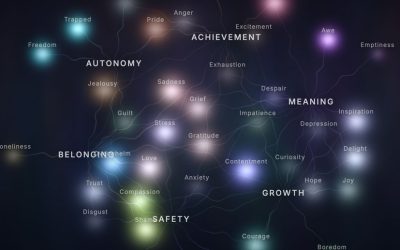
Emotions Travel in Packs: What Your Feelings Are Really Trying to Tell You (The Emotion Constellation Map)
Your feelings travel in packs. Learn how the Emotion Constellation model reveals the hidden connections between feelings — and the deeper needs they share.

Should I Stay or Should I Go? Understanding Your Emotional Needs
When you’re facing an internal conflict, emotions can become confusing. Here’s how to “look beneath the surface” to discover the needs hiding behind your feelings.